PHARMACEUTICAL
&
MEDICAL DEVICES
BATTERY TECHNOLOGY
CATALYSIS
PHARMACEUTICAL &
MEDICAL DEVICES
BATTERY TECHNOLOGY
CARBON CAPTURE &
HYDROGEN STORAGE
CATALYSIS
GEOLOGY &
CONSTRUCTION
CERAMICS &
FILTER MEDIA
2026 MCA Services. All rights reserved





Gas Adsorption
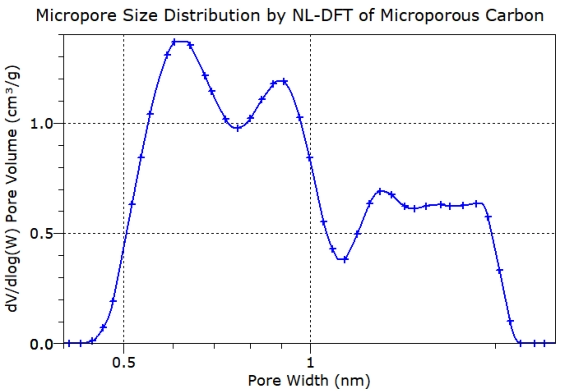
Ultra-micropore analysis (< 1.0 nm)
Micropore analysis (< 2.0 nm)
Mesopore analysis (2 – 50 nm)
Pore volume measurement
Pore size distribution measurement
Specific surface area (BET) measurement
Specific probe gases available
Mercury Porosimetry
Mercury intrusion and extrusion options
Mesopore & Macropore analysis (3.5 nm –
650 µm)
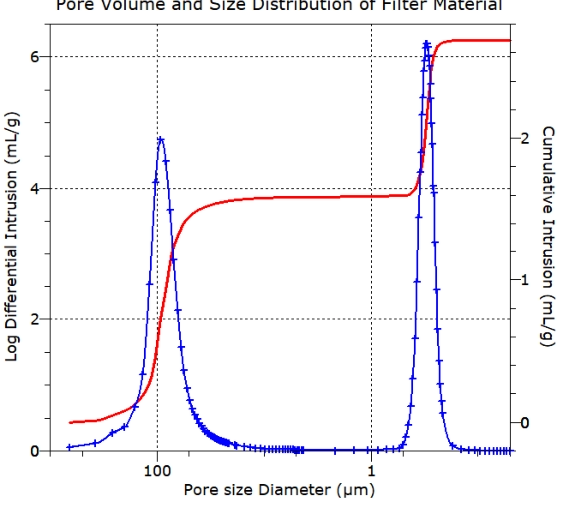
Pore volume measurement
Pore size distribution measurement
Absolute porosity, bulk density and skeletal
density
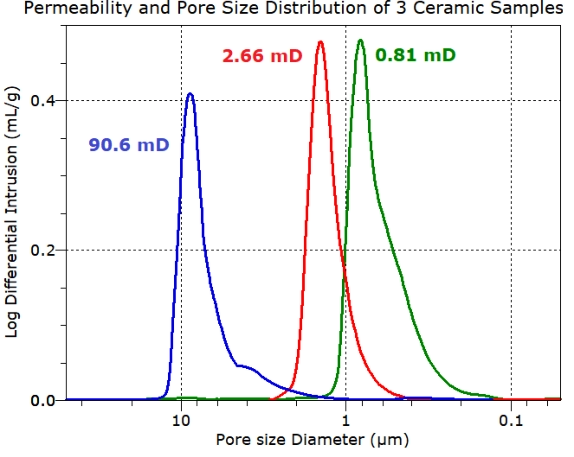
Permeability and tortuosity measurement
Cavity to throat size measurement
Helium Pycnometry
Absolute density measurement
Chemisorption and Temperature Programmed
Analysis
Application to active metal doped media
Active component dispersion and surface area
Reduction, oxidation and desorption temperature
profiles
Key Analytical Techniques
Ceramics
and
filter
media
are
applied
to
a
very
broad
range
of
applications
and
are
intended
for
exposure
to
a
diverse
range
of
operating
conditions
and
interacting
species.
Requirements
of
pore
size,
pore
volume
and
specific
surface
area
therefore
cover
a
wide
range
are
usually
very
demanding
with
respect
to
the
absolute
values.
At
MCA
Services
we
offer
a
complete
suite
of
analytical
techniques
which
allows
for
the
complete
characterisation
of
porosity
throughout
the
ranges
of
micropores
(<
2nm
diameter)
through
to
macro-pores
(up
to
650
µm).
When
the
ceramic
or
filter
media
is
doped
with
a
chemically
active
metallic
component,
chemisorption
options
become
particularly
useful.
Chemisorption
provides
the
means
of
analysing
the
active
component alone for its surface area, crystallite size and, importantly, chemical availability via its dispersion.
Determination of pore size and volume
Determination of absolute porosity
Selection and control of raw material constituents
Formulation and fabrication process control
Identification of optimum fabrication conditions
Selection of materials for specific applications
Monitoring of products for efficacy during use
Investigation product failure and performance issues
Investigating product regeneration
Application to filtration of gaseous environments
Application to fluid environments and water
treatment
Key Applications
The
porosity
of
ceramics
and
filter
media
is
often
inextricably
linked
to
their
performance
in
a
wide
range
of
applications.
When
selecting,
assessing
or
producing
ceramics
and
filter
media
it
is
necessary
to
consider
the
required
porous
characteristics
with
respect
to
the
intended
application.
Changes
in
porosity
also
need
to
be
considered
during
product
use,
especially
with
regard
to
capacity
thresholds,
pore
blocking
or
fouling
and
product
regeneration.
The
porous
nature
of
raw
material
powders,
together
with
manufacturing
conditions,
often dictate the ultimate pore size and volume of a finished product, and therefore its efficacy.
CERAMICS & FILTER MEDIA
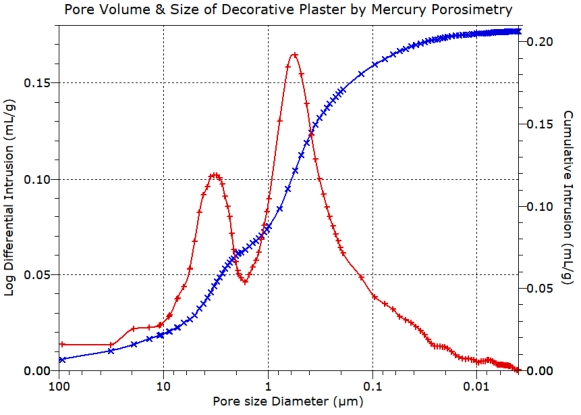
BET Surface Area - including krypton adsorption for
low area materials
Mercury Intrusion Porosimetry - pore size, pore
volume & pore area distribution
Mercury Extrusion Porosimetry - for cavity to throat
size evaluation
Permeability and Tortuosity measurement via
Mercury Porosimetry
Gas Adsorption - pore size, area and volume
distribution in the micropore and mesopore ranges
Density measurement - absolute density, bulk
density, skeletal density & particle density
Specific probe gases, e.g. H
2
, CO
2
, O
2
etc available for
adsorption capacity measurement
Key Analytical Techniques
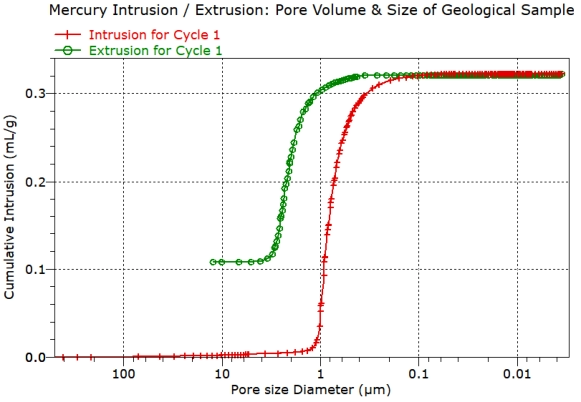
Porous charaterisation of geological samples
Porous charatcerisation of construction materials
Porosity characterisation for fluid flow and
retention
Porosity characterisation for gas storage and
retention
Interaction with specific gases: hydrogen and CO
2
Assessment of ageing, disintegration and life-cycle
Product development: constituents and blends
Product application and surface treatments
Key Applications
Understanding
the
porous
characteristics
of
solid
materials
is
often
of
critical
importance
throughout
geological
and
construction
industries
and
disciplines.
Porosity
directly
determines
the
behaviour
between
a
material
and
a
fluid
media:
this
includes
fluid
flow
through
a
sample,
fluid
retention,
drying
and
curing properties, degradation characteristics and adhesion properties.
The
porosity
of
geological
materials
is
of
great
importance
across
disciplines
of
hydro-geology,
petrology,
environmental
engineering
and
geo-chemistry.
Pore
sizes
can
vary
enormously:
larger
pores
have
a
greater
interaction
with
fluid
media
whilst
smaller
pores
are
of
particular
importance
to
gaseous
permittivity,
retention
and
storage.
Understanding
porosity
within
small
pores
is,
therefore,
of
critical
importance
to
sectors
concerned
with
both
conventional
and
un-conventional
energy
and
net-zero
technologies.
The
interaction
of
fluids
with
construction
materials
is
significant
throughout
their
life-cycle,
from
drying
and
curing
characteristics
of
concretes
and
coatings
to
through
the
aging
process
-
ultimately
influencing
their
life-time
and
degradation
characteristics.
The
porosity
of
the
constituent
powder
materials
or
powder
blend
heavily
influences
the
usage
and
performance
characteristics
of
the
materials,
for
example
drying
times, shelf life and adhesion qualities.
CONSTRUCTION & GEOLOGY
MCA
Services
offers
a
complete
suite
of
techniques
for
the
physical
characterisation
of
catalyst
systems.
The
combination
of
mercury
porosimetry
and
gas
adsorption
provides
characterisation
throughout
the
pore
size
range,
from
micropores
through
to
macro-pores
with
a
maximum
size
of
~
650
µm.
Mercury
porosimetry
can
be
extended
to
consider
extrusion
analysis
for
consideration
of
pore
geometry
and
also
permeability and tortuosity determination.
Most
gas
adsorption
options
also
include
the
calculation
of
BET
surface
area
as
standard.
Whilst
nitrogen
adsorption
is
the
most
commonly
applied
technique,
alternatives
are
available
for
more
specialised
analyses.
For
example
carbon
dioxide
for
ultra-micropores
with
the
capability
of
combination
with
nitrogen
adsorption
to
complete
a
single,
harmonious,
pore
size
distribution.
Argon
adsorption
is
available
for
micro-porous
materials
proving
problematic
for
nitrogen
adsorption,
for
example
those
with
charged
surface species such as zeolites and organic frameworks.
Chemisorption
(chemical
adsorption)
is
routinely
applied
to
the
analysis
of
active
metal
constituents
to
determine
their
availability
for
a
desired
catalytic
reaction.
Active
metal
dispersion,
surface
area
and
crystallite
size
are
commonly
applied
and
at
MCA
Services
we
offer
dynamic
(pulse)
chemisorption
using
hydrogen
and
carbon
monoxide
probe
molecules.
We
also
offer
more
specialised
options,
for
example
nitrous
oxide
and
ammonia
to
ensure
that
the
majority
of
active
metals
and
loadings
can
be
analysed
with
confidence.
Alongside
chemisorption,
our
Temperature
Programmed
options
provide
analyses
for
reduction,
oxidation
and
desorption,
completing
the
characterisation
and
understanding
of
active
constituents.
Gas Adsorption: pore size, area and volume
determination in the micropore and mesopore
ranges.
Gas Adsorption: BET Surface Area.
Mercury Porosimetry: pore size, area and volume
determination in meso & macropore ranges.
Mercury Intrusion / Extrusion Porosimetry: cavity to
throat size determination.
Permeability and Tortuosity: measurement by
mercury intrusion porosimetry.
Chemisorption: active metal surface area and
dispersion measurement – static and dynamic
methods.
Temperature Programmed Methods: reduction,
oxidation, adsorption & desorption.
Density Measurement: absolute density, bulk
(envelope) density and skeletal density
Key Techniques
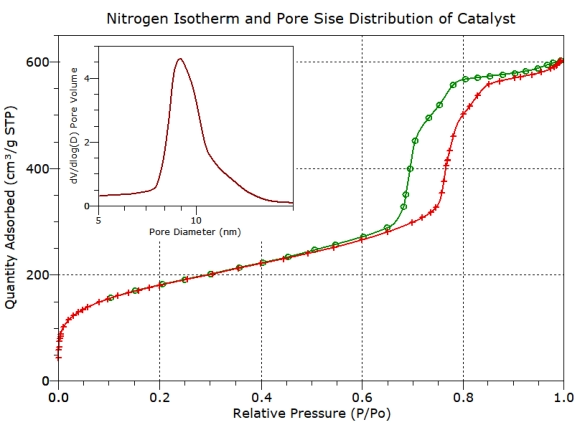
The
significance
and
influence
of
the
porous
nature
of
catalyst
systems
with
respect
to
their
functionality,
performance
and
efficiency
is
well
known,
as
is
the
understanding
of
the
physico-chemical
properties
of
the
active
constituents.
Characterisation
of
the
porous
nature
of
catalysts
can
be
applied
to
the
active
constituents,
support
materials
or
the
finished
system.
Understanding
the
porous
and
active
nature
of
catalysts
is
vital
to
both
un-used
and
spent
materials
and
also
when
considering
degradation
and
the
regeneration process.
CATALYSIS
Traditional
porosity
characterisation
techniques,
such
as
nitrogen
gas
adsorption
and
mercury
porosimetry
can
be
applied
to
virtually
any
solid
form,
from
powders
to
granules
and
extrudates.
The
porous
nature
of
the
material
can
thus
be
explored,
from
micropores
through
to
larger
inter-particulate
or
inter-granular
pores
(the
classic
transport
pores).
However,
due
to
physical
and
physico-chemical
properties
of
the
adsorbent,
specific
adsorbates
often
require
dedicated
analyses.
We
therefore
offer
a
comprehensive
range
of
adsorbate
options,
notably
hydrogen
and
carbon
dioxide
which
can
be
applied
to
gas
adsorption
and
temperature
programmed
analyses
in
order
to
determine
the
sorption
ability
and
capacity
under
more
specific conditions.
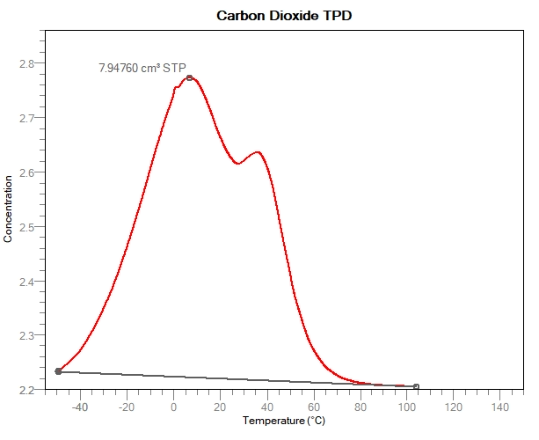
BET Surface Area: rapid porosity assessment
Gas adsorption: micro- and meso-pore
characterisation
Gas adsorption: sorption capacity
Gas adsorption: heat of adsorption
Gas adsorption: N
2
, H
2
and CO
2
options
Mercury porosimetry: meso and macro-pore
characterisation
Mercury porosimetry: absolute porosity
Mercury porosimetry: permeability and tortuosity
Temperature programmed desorption: sorption
capacity and kinetics
Key Techniques
The
move
towards
greener,
environmentally
friendly
technologies
places
increasing
demands
on
the
identification,
development
and
fabrication
of
materials
having
precisely
controlled
physical
and
physico-
chemical
properties.
Essentially
materials
must
adsorb
and
retain
a
desired
species,
with
the
potential
to
later
release
the
species
under
specific
conditions
depending
on
the
application.
Physical
material
properties
are
central
to
the
development
of
green
materials.
Characteristics
of
porosity,
such
as
pore
volume,
pore
size
and
pore
geometry
determine
the
sorption
process:
whether
a
species
can
adsorb
to
the
material
reasonably
easily,
whether
it
will
be
retained,
the
ease
of
its
removal
and
critically,
the
quantity
which
may
be
adsorbed.
Physico-chemical
properties,
notably
the
presence
and
extent
of
charged
surface
species
also
play
a
critical
role
in
the
adsorption
process
and
may
be
beneficial
or
detrimental
depending
on the nature of a particular adsorbate.
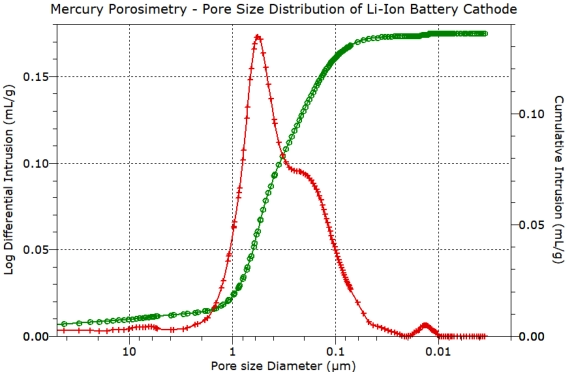
CARBON CAPTURE AND HYDROGEN STORAGE
Pore
sizes
present
within
electrodes
typically
fall
within
the
range
analysed
by
the
Mercury
Porosimetry
technique.
This
can
be
extended
to
consider
permeability,
a
useful
comparison
tool
when
considering
fluid
flow
into
and
through
a
porous
sample.
This
technique
is
also
applicable
to
the
analysis
of
separator
materials where a tight distribution of pore sizes is often demanded for efficient transport.
Determination of separator pore size and porosity
Optimisation of slurry composition
Optimisation of calendaring process
Optimisation of drying process
Characterisation of anode porosity
Characterisation of cathode porosity
Direct relationships with electrode performance
Efficiency and capacity
Charge & Discharge performance
Cycle lifetime
Charging characteristics
Electrolyte transport
Key Applications - Components
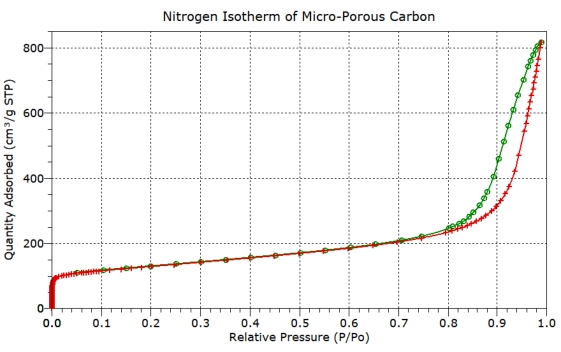
Understanding
particle
porosity
is
vital
to
the
selection
and
control
of
high
surface
area
components,
such
as
carbons
and
graphites,
as
well
as
monitoring
cathode
materials
and
assessing
the
intercalation
procedure.
Full
characterisation
of
inter-particulate
porosity
is
essential
as
this
describes
packing
characteristics
which,
in
combination
with
processing
conditions,
determine
the
porosity
of
the
finished
electrode
This
involves
fully
understanding
inter-particulate
spaces
beyond
that
suggested
by
particle
size
alone.
Assessment of porous nature of raw materials for
formulation
Quality control of incoming raw materials
Surface area and porosity of high area carbons &
graphites
Surface area and porosity of active cathode material
Characterisation of inter-particulate porosity
Formulation of binder composition and loading
Measurement of absolute, bulk and particle density
Determination of processing conditions
Key Applications - Materials
The
porous
nature
of
battery
components:
anode,
cathode,
separator
and
solid
electrolyte
and
also
finished
electrode
architecture
is
critical
to
the
development,
performance
and
optimization
of
battery
systems.
Porous
characteristics
profoundly
influence
the
performance
of
the
finished
cell
since
combination
of
the
porous
nature
of
the
raw
materials
and
fabrication
steps
applied
determine
the
ultimate
porosity
within
components
of
the
cell.
The
porous
characteristics
of
finished
electrodes
are
partially
determined
by
the
inter-particulate
porosity
of
the
raw
materials,
porosity
within
raw
material
particles,
binder
material
and
loading
and
production
conditions
such
as
calendaring
and
drying.
Electrode
porosity
is
critical
in
the
determination
of
conductivity,
energy
density,
charging
efficiency,
electrolyte
transport
characteristics,
cycling
lifetime,
availability
of
electrochemically
active
sites
and
electrode
degradation.
Understanding
porosity
allows
for
focused
selection
of
raw
materials
and
optimisation
of
processing
conditions.
Complete
understanding
of
the
porous
character
of
materials
is,
therefore,
critical
to
all
stages
of
materials
selection, cell development and electrode processing.
BATTERY TECHNOLOGY
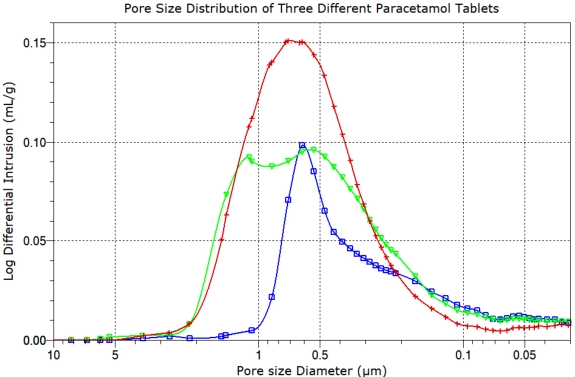
Mercury Porosimetry
Pore volume Distribution
Pore Size Distribution
Pore Area Distribution
Absolute Porosity
Bulk and Skeletal Density
Pore Geometry
Permeability Measurement
Applicable to all solid forms
Gas Adsorption
BET Specific Surface Area by Nitrogen
BET Specific Surface Area by Krypton (low SSA)
Micro-pore / Meso-pore characterisation
Pore volume Distribution
Pore Size Distribution
Pore Area Distribution
Key Analytical Techniques
Characterisation of API and excipient materials
Characterisation of powder blends
Investigation of batch failures and inter-batch
variability
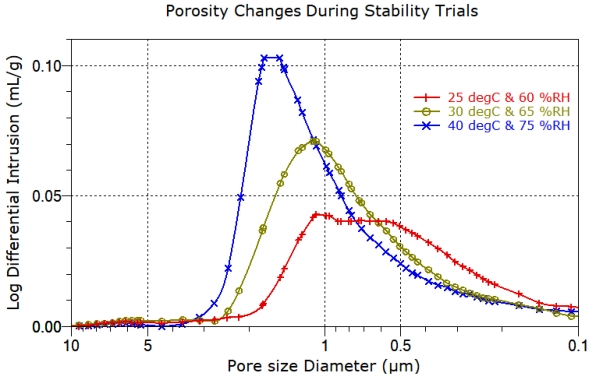
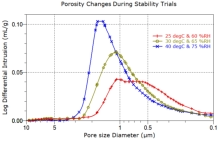
Influence of stability trials on porosity
Determination of long-term stability and shelf life
Investigation and establishment of tabletting
conditions
Identification of counterfeit batches
Significant to approval processes
All analyses undertaken to ISO 17025 standards
Key Applications
The
physical
characteristics
of
pharmaceuticals
profoundly
influence
the
properties
and
effectiveness
of
the
final
dosage
form,
be
it
administered
via
tablet,
granule
/
capsule
or
inhalation
routes.
Furthermore,
knowledge
of
physical
characteristics
often
contributes
to
the
critical
understanding
of
all
components,
such
as
API,
excipients,
powder
blends
and
intermediate
ribbons
as
well
as
the
final
form.
This
is
applicable
to
all
stages
of
pharmaceutical
processes:
from
formulation
through
manufacturing
to
quality
control,
stability trials and trouble-shooting atypical behaviour.
Physical
characteristics
commonly
include
specific
surface
area
(SSA),
pore
size
distribution,
pore
volume
and
density,
which
together
provide
a
complete
understanding
of
porous
character.
In
turn,
porosity
has
direct
effects
on
many
aspects
of
performance,
for
example
dissolution
and
disintegration
rates,
strength
and
hardness
and
long
term
stability.
They
also
influence
formulation
and
effect
stability
of
solid
components in many emulsion, paste and topical forms.
Porosity
in
pharmaceutical
materials
can
be
present
in
various
locations:
within
tablet
cores
and
granules,
coatings,
within
the
particles
of
a
pre-cursor
powder
blend
and
also
the
void
spaces
between
powder
particles.
The
latter
dictates
the
porous
characteristics
of
tabletted
forms.
SSA
measurement
is
routinely
and
usefully
applied
to
the
characterisation
of
powder
samples
but
the
pore
sizes
present
commonly
fall
within
the
range
measured
by
the
mercury
porosimetry
technique,
in
which
SSA
measurements
are
less
sensitive.
Porosimetry
thus
provides
a
complete
picture
of
pore
size,
pore
volume,
absolute
porosity
and
density,
as
well
as
providing
insight
to
pore
geometry.
These
porosity
characteristics,
which
dictate
performance
behaviours,
may
be
indicative
of
atypical
performance,
and
often
change
during
the
aging
processes applied during stability trials.
At
MCA
Services
we
offer
a
suite
of
analytical
techniques
for
the
complete
characterisation
of
pharmaceutical
samples.
This
is
combined
with
the
experience
and
expertise
to
actively
assist
with
the
interpretation
of
results
directly
relating
these
to
performance
characteristics
of
the
material.
We
have
many
years
of
experience
partnering
with
the
pharmaceutical
sector,
considering
a
wide
variety
of
dosage
forms
and
applications,
from
formulation
to
stability
trials
and
identification
of
the
influence
of
porosity
to
materials and batches having atypical behaviour.
PHARMACEUTICALS & MEDICAL DEVICES





Product development and formulation
Determination of product specifications
Determination of stability and shelf life
Control and assessment of raw materials
Generation of Quality Control data
Analysis of performance loss during use
Material regeneration
Determination of consistency
Identification of factors influencing performance
Investigations into product failure
Economising material usage
Determination of the effects of additives
Development of process control Provision of critical
QbD framework data
Litigation support and patent formulation
Key Applications
Adsorbents
Alumina and Silica
Carbons, Charcoals and Graphites
Catalysts
Ceramics
Coatings
Films, Fabrics and Membranes
Metal Organic Frameworks
Metallic Compounds and Oxides
Pharmaceutical Tablets and Powders
Polymers
Zeolites
Materials
The
analytical
tests
offered
by
MCA
Services
provide
a
wealth
of
information
describing
the
physical
and
physico-chemical
nature
of
materials,
including
porous
characteristics
and
chemical
activity.
Such
information
is
invaluable
to
many
sectors
and
applications,
for
example:
as
part
of
routine
quality
control,
raw
material
assessment,
research
and
development
and
product
failure
investigations.
Some
examples
of
sectors
and
applications
that
have
benefited
from
our
analytical
techniques
and
insight
are
highlighted
below.
The
porous
characteristics
of
materials
often
have
profound
effects
on
efficacy
and
performance.
Porosity
may
be
described
by
a
combination
of
features:
specific
surface
area,
pore
volume,
pore
size
distribution,
pore
geometry,
particle
size
and
geometry
and
sample
density.
These
are
often
considered
in
combination
to
obtain
a
complete
description
of
porosity
and
can
be
applied
to
virtually
any
solid
form,
from
fine
particulate matter through to larger solid forms.
Product development and
formulation
Determination of product
specifications
Determination of stability and shelf
life
Control and assessment of raw
materials
Generation of Quality Control data
Analysis of performance loss
during use
Material regeneration
Key Applications
Adsorbents
Alumina and Silica
Carbons, Charcoals and Graphites
Catalysts
Ceramics
Coatings
Materials
The
analytical
tests
offered
by
MCA
Services
provide
a
wealth
of
information
describing
the
physical
and
physico-chemical
nature
of
materials,
including
porous
characteristics
and
chemical
activity.
Such
information
is
invaluable
to
many
sectors
and
applications,
for
example:
as
part
of
routine
quality
control,
raw
material
assessment,
research
and
development
and
product
failure
investigations.
Some
examples
of
sectors
and
applications
that
have
benefited
from
our
analytical
techniques and insight are highlighted below.
The
porous
characteristics
of
materials
often
have
profound
effects
on
efficacy
and
performance.
Porosity
may
be
described
by
a
combination
of
features:
specific
surface
area,
pore
volume,
pore
size
distribution,
pore
geometry,
particle
size
and
geometry
and
sample
density.
These
are
often
considered
in
combination
to
obtain
a
complete
description
of
porosity
and
can
be
applied
to
virtually
any
solid
form,
from
fine
particulate matter through to larger solid forms.
Films, Fabrics and Membranes
Metal Organic Frameworks
Metallic Compounds and Oxides
Pharmaceutical Tablets and
Powders
Polymers
Zeolites
Determination of consistency
Identification of factors
influencing performance
Investigations into product failure
Economising material usage
Determination of the effects of
additives
Development of process control
Provision of critical QbD framework
data
Litigation support and patent
formulation





2026 MCA Services. All rights reserved


Gas Adsorption
Ultra-micropore analysis (< 1.0 nm)
Micropore analysis (< 2.0 nm)
Mesopore analysis (2 – 50 nm)
Pore volume measurement
Pore size distribution
measurement
Specific surface area (BET)
measurement
Specific probe gases available
Mercury Porosimetry
Mercury intrusion and extrusion
options
Mesopore & Macropore analysis
(3.5 nm –
650 µm)
Pore volume measurement
Pore size distribution
measurement
Absolute porosity, bulk density and
skeletal density
Permeability and tortuosity
measurement
Cavity to throat size measurement
Helium Pycnometry
Absolute density measurement
Chemisorption and Temperature
Programmed Analysis
Application to active metal doped
media
Active component dispersion and
surface area
Reduction, oxidation and
desorption temperature profiles
Key Analytical Techniques
Ceramics
and
filter
media
are
applied
to
a
very
broad
range
of
applications
and
are
intended
for
exposure
to
a
diverse
range
of
operating
conditions
and
interacting
species.
Requirements
of
pore
size,
pore
volume
and
specific
surface
area
therefore
cover
a
wide
range
are
usually
very
demanding
with
respect
to
the
absolute
values.
At
MCA
Services
we
offer
a
complete
suite
of
analytical
techniques
which
allows
for
the
complete
characterisation
of
porosity
throughout
the
ranges
of
micropores
(<
2nm
diameter)
through
to
macro-pores
(up
to
650
µm).
When
the
ceramic
or
filter
media
is
doped
with
a
chemically
active
metallic
component,
chemisorption
options
become
particularly
useful.
Chemisorption
provides
the
means
of
analysing
the
active
component
alone
for
its
surface
area,
crystallite
size
and,
importantly,
chemical availability via its dispersion.
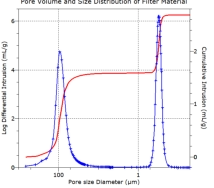
Determination of pore size and
volume
Determination of absolute porosity
Selection and control of raw material
constituents
Formulation and fabrication process
control
Identification of optimum fabrication
conditions
Selection of materials for specific
applications
Monitoring of products for efficacy
during use
Investigation product failure and
performance issues
Investigating product regeneration
Application to filtration of gaseous
environments
Application to fluid environments and
water treatment
Key Applications
The
porosity
of
ceramics
and
filter
media
is
often
inextricably
linked
to
their
performance
in
a
wide
range
of
applications.
When
selecting,
assessing
or
producing
ceramics
and
filter
media
it
is
necessary
to
consider
the
required
porous
characteristics
with
respect
to
the
intended
application.
Changes
in
porosity
also
need
to
be
considered
during
product
use,
especially
with
regard
to
capacity
thresholds,
pore
blocking
or
fouling
and
product
regeneration.
The
porous
nature
of
raw
material
powders,
together
with
manufacturing
conditions,
often
dictate
the
ultimate
pore
size
and
volume
of
a
finished
product,
and
therefore its efficacy.
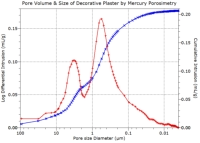
BET Surface Area - including krypton
adsorption for low area materials
Mercury Intrusion Porosimetry - pore size,
pore volume & pore area distribution
Mercury Extrusion Porosimetry - for cavity
to throat size evaluation
Permeability and Tortuosity measurement
via Mercury Porosimetry
Gas Adsorption - pore size, area and
volume distribution in the micropore and
mesopore ranges
Density measurement - absolute density,
bulk density, skeletal density & particle
density
Specific probe gases, e.g. H
2
, CO
2
, O
2
etc
available for adsorption capacity
measurement
Key Analytical Techniques
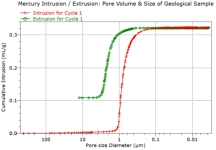
Porous charaterisation of geological
samples
Porous charatcerisation of
construction materials
Porosity characterisation for fluid flow
and retention
Porosity characterisation for gas
storage and retention
Interaction with specific gases:
hydrogen and CO
2
Assessment of ageing, disintegration
and life-cycle
Product development: constituents and
blends
Product application and surface
treatments
Key Applications
Understanding
the
porous
characteristics
of
solid
materials
is
often
of
critical
importance
throughout
geological
and
construction
industries
and
disciplines.
Porosity
directly
determines
the
behaviour
between
a
material
and
a
fluid
media:
this
includes
fluid
flow
through
a
sample,
fluid
retention,
drying
and
curing
properties,
degradation
characteristics and adhesion properties.
The
porosity
of
geological
materials
is
of
great
importance
across
disciplines
of
hydro-geology,
petrology,
environmental
engineering
and
geo-chemistry.
Pore
sizes
can
vary
enormously:
larger
pores
have
a
greater
interaction
with
fluid
media
whilst
smaller
pores
are
of
particular
importance
to
gaseous
permittivity,
retention
and
storage.
Understanding
porosity
within
small
pores
is,
therefore,
of
critical
importance
to
sectors
concerned
with
both
conventional
and
un-
conventional energy and net-zero technologies.
The
interaction
of
fluids
with
construction
materials
is
significant
throughout
their
life-cycle,
from
drying
and
curing
characteristics
of
concretes
and
coatings
to
through
the
aging
process
-
ultimately
influencing
their
life-time
and
degradation
characteristics.
The
porosity
of
the
constituent
powder
materials
or
powder
blend
heavily
influences
the
usage
and
performance
characteristics
of
the
materials,
for
example drying times, shelf life and adhesion qualities.
MCA
Services
offers
a
complete
suite
of
techniques
for
the
physical
characterisation
of
catalyst
systems.
The
combination
of
mercury
porosimetry
and
gas
adsorption
provides
characterisation
throughout
the
pore
size
range,
from
micropores
through
to
macro-pores
with
a
maximum
size
of
~
650
µm.
Mercury
porosimetry
can
be
extended
to
consider
extrusion
analysis
for
consideration
of
pore
geometry
and
also
permeability and tortuosity determination.
Most
gas
adsorption
options
also
include
the
calculation
of
BET
surface
area
as
standard.
Whilst
nitrogen
adsorption
is
the
most
commonly
applied
technique,
alternatives
are
available
for
more
specialised
analyses.
For
example
carbon
dioxide
for
ultra-micropores
with
the
capability
of
combination
with
nitrogen
adsorption
to
complete
a
single,
harmonious,
pore
size
distribution.
Argon
adsorption
is
available
for
micro-porous
materials
proving
problematic
for
nitrogen
adsorption,
for
example
those
with
charged
surface
species
such
as
zeolites
and
organic frameworks.
Chemisorption
(chemical
adsorption)
is
routinely
applied
to
the
analysis
of
active
metal
constituents
to
determine
their
availability
for
a
desired
catalytic
reaction.
Active
metal
dispersion,
surface
area
and
crystallite
size
are
commonly
applied
and
at
MCA
Services
we
offer
dynamic
(pulse)
chemisorption
using
hydrogen
and
carbon
monoxide
probe
molecules.
We
also
offer
more
specialised
options,
for
example
nitrous
oxide
and
ammonia
to
ensure
that
the
majority
of
active
metals
and
loadings
can
be
analysed
with
confidence.
Alongside
chemisorption,
our
Temperature
Programmed
options
provide
analyses
for
reduction,
oxidation
and
desorption,
completing
the
characterisation and understanding of active constituents.
Gas Adsorption: pore size, area and volume
determination in the micropore and
mesopore ranges.
Gas Adsorption: BET Surface Area.
Mercury Porosimetry: pore size, area and
volume determination in meso & macropore
ranges.
Mercury Intrusion / Extrusion Porosimetry:
cavity to throat size determination.
Permeability and Tortuosity: measurement
by mercury intrusion porosimetry.
Chemisorption: active metal surface area
and dispersion measurement – static and
dynamic methods.
Temperature Programmed Methods:
reduction, oxidation, adsorption &
desorption.
Density Measurement: absolute density,
bulk (envelope) density and skeletal density
Key Techniques
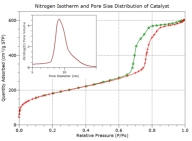
The
significance
and
influence
of
the
porous
nature
of
catalyst
systems
with
respect
to
their
functionality,
performance
and
efficiency
is
well
known,
as
is
the
understanding
of
the
physico-chemical
properties
of
the
active
constituents.
Characterisation
of
the
porous
nature
of
catalysts
can
be
applied
to
the
active
constituents,
support
materials
or
the
finished
system.
Understanding
the
porous
and
active
nature
of
catalysts
is
vital
to
both
un-used
and
spent
materials
and
also
when
considering degradation and the regeneration process.
Traditional
porosity
characterisation
techniques,
such
as
nitrogen
gas
adsorption
and
mercury
porosimetry
can
be
applied
to
virtually
any
solid
form,
from
powders
to
granules
and
extrudates.
The
porous
nature
of
the
material
can
thus
be
explored,
from
micropores
through
to
larger
inter-particulate
or
inter-granular
pores
(the
classic
transport
pores).
However,
due
to
physical
and
physico-chemical
properties
of
the
adsorbent,
specific
adsorbates
often
require
dedicated
analyses.
We
therefore
offer
a
comprehensive
range
of
adsorbate
options,
notably
hydrogen
and
carbon
dioxide
which
can
be
applied
to
gas
adsorption
and
temperature
programmed
analyses
in
order
to
determine
the
sorption ability and capacity under more specific conditions.
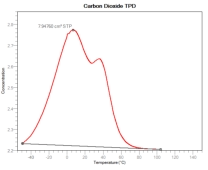
BET Surface Area: rapid porosity
assessment
Gas adsorption: micro- and meso-pore
characterisation
Gas adsorption: sorption capacity
Gas adsorption: heat of adsorption
Gas adsorption: N
2
, H
2
and CO
2
options
Mercury porosimetry: meso and macro-
pore characterisation
Mercury porosimetry: absolute porosity
Mercury porosimetry: permeability and
tortuosity
Temperature programmed desorption:
sorption capacity and kinetics
Key Techniques
The
move
towards
greener,
environmentally
friendly
technologies
places
increasing
demands
on
the
identification,
development
and
fabrication
of
materials
having
precisely
controlled
physical
and
physico-chemical
properties.
Essentially
materials
must
adsorb
and
retain
a
desired
species,
with
the
potential
to
later
release
the
species
under
specific
conditions
depending
on
the
application.
Physical
material
properties
are
central
to
the
development
of
green
materials.
Characteristics
of
porosity,
such
as
pore
volume,
pore
size
and
pore
geometry
determine
the
sorption
process:
whether
a
species
can
adsorb
to
the
material
reasonably
easily,
whether
it
will
be
retained,
the
ease
of
its
removal
and
critically,
the
quantity
which
may
be
adsorbed.
Physico-chemical
properties,
notably
the
presence
and
extent
of
charged
surface
species
also
play
a
critical
role
in
the
adsorption
process
and
may
be
beneficial
or
detrimental
depending
on
the nature of a particular adsorbate.
Pore
sizes
present
within
electrodes
typically
fall
within
the
range
analysed
by
the
Mercury
Porosimetry
technique.
This
can
be
extended
to
consider
permeability,
a
useful
comparison
tool
when
considering
fluid
flow
into
and
through
a
porous
sample.
This
technique
is
also
applicable
to
the
analysis
of
separator
materials
where
a
tight
distribution of pore sizes is often demanded for efficient transport.
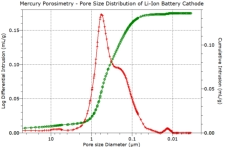
Determination of separator pore size
and porosity
Optimisation of slurry composition
Optimisation of calendaring process
Optimisation of drying process
Characterisation of anode porosity
Characterisation of cathode porosity
Direct relationships with electrode
performance
Efficiency and capacity
Charge & Discharge performance
Cycle lifetime
Charging characteristics
Electrolyte transport
Key Applications - Components
Understanding
particle
porosity
is
vital
to
the
selection
and
control
of
high
surface
area
components,
such
as
carbons
and
graphites,
as
well
as
monitoring
cathode
materials
and
assessing
the
intercalation
procedure.
Full
characterisation
of
inter-particulate
porosity
is
essential
as
this
describes
packing
characteristics
which,
in
combination
with
processing
conditions,
determine
the
porosity
of
the
finished
electrode
This
involves
fully
understanding
inter-particulate
spaces beyond that suggested by particle size alone.
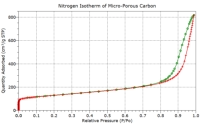
Assessment of porous nature of raw
materials for formulation
Quality control of incoming raw materials
Surface area and porosity of high area
carbons & graphites
Surface area and porosity of active
cathode material
Characterisation of inter-particulate
porosity
Formulation of binder composition and
loading
Measurement of absolute, bulk and
particle density
Determination of processing conditions
Key Applications - Materials
The
porous
nature
of
battery
components:
anode,
cathode,
separator
and
solid
electrolyte
and
also
finished
electrode
architecture
is
critical
to the development, performance and optimization of battery systems.
Porous
characteristics
profoundly
influence
the
performance
of
the
finished
cell
since
combination
of
the
porous
nature
of
the
raw
materials
and
fabrication
steps
applied
determine
the
ultimate
porosity
within
components
of
the
cell.
The
porous
characteristics
of
finished
electrodes
are
partially
determined
by
the
inter-particulate
porosity
of
the
raw
materials,
porosity
within
raw
material
particles,
binder
material
and
loading
and
production
conditions
such
as
calendaring
and
drying.
Electrode
porosity
is
critical
in
the
determination
of
conductivity,
energy
density,
charging
efficiency,
electrolyte
transport
characteristics,
cycling
lifetime,
availability
of
electrochemically
active
sites
and
electrode
degradation.
Understanding
porosity
allows
for
focused
selection
of
raw
materials
and
optimisation
of
processing
conditions.
Complete
understanding
of
the
porous
character
of
materials
is,
therefore,
critical
to
all
stages
of
materials selection, cell development and electrode processing.
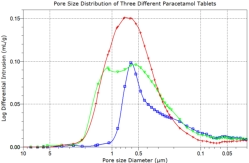
Mercury Porosimetry
Pore volume Distribution
Pore Size Distribution
Pore Area Distribution
Absolute Porosity
Bulk and Skeletal Density
Pore Geometry
Permeability Measurement
Applicable to all solid forms
Gas Adsorption
Key Analytical Techniques
Characterisation of API and excipient
materials
Characterisation of powder blends
Investigation of batch failures and
inter-batch variability
Influence of stability trials on porosity
Determination of long-term stability
and shelf life
Investigation and establishment of
tabletting conditions
Identification of counterfeit batches
Significant to approval processes
All analyses undertaken to ISO 17025
standards
Key Applications
The
physical
characteristics
of
pharmaceuticals
profoundly
influence
the
properties
and
effectiveness
of
the
final
dosage
form,
be
it
administered
via
tablet,
granule
/
capsule
or
inhalation
routes.
Furthermore,
knowledge
of
physical
characteristics
often
contributes
to
the
critical
understanding
of
all
components,
such
as
API,
excipients,
powder
blends
and
intermediate
ribbons
as
well
as
the
final
form.
This
is
applicable
to
all
stages
of
pharmaceutical
processes:
from
formulation
through
manufacturing
to
quality
control,
stability
trials
and trouble-shooting atypical behaviour.
Physical
characteristics
commonly
include
specific
surface
area
(SSA),
pore
size
distribution,
pore
volume
and
density,
which
together
provide
a
complete
understanding
of
porous
character.
In
turn,
porosity
has
direct
effects
on
many
aspects
of
performance,
for
example
dissolution
and
disintegration
rates,
strength
and
hardness
and
long
term
stability.
They
also
influence
formulation
and
effect
stability
of
solid
components
in many emulsion, paste and topical forms.
Porosity
in
pharmaceutical
materials
can
be
present
in
various
locations:
within
tablet
cores
and
granules,
coatings,
within
the
particles
of
a
pre-cursor
powder
blend
and
also
the
void
spaces
between
powder
particles.
The
latter
dictates
the
porous
characteristics
of
tabletted
forms.
SSA
measurement
is
routinely
and
usefully
applied
to
the
characterisation
of
powder
samples
but
the
pore
sizes
present
commonly
fall
within
the
range
measured
by
the
mercury
porosimetry
technique,
in
which
SSA
measurements
are
less
sensitive.
Porosimetry
thus
provides
a
complete
picture
of
pore
size,
pore
volume,
absolute
porosity
and
density,
as
well
as
providing
insight
to
pore
geometry.
These
porosity
characteristics,
which
dictate
performance
behaviours,
may
be
indicative
of
atypical
performance,
and
often
change during the aging processes applied during stability trials.
At
MCA
Services
we
offer
a
suite
of
analytical
techniques
for
the
complete
characterisation
of
pharmaceutical
samples.
This
is
combined
with
the
experience
and
expertise
to
actively
assist
with
the
interpretation
of
results
directly
relating
these
to
performance
characteristics
of
the
material.
We
have
many
years
of
experience
partnering
with
the
pharmaceutical
sector,
considering
a
wide
variety
of
dosage
forms
and
applications,
from
formulation
to
stability
trials
and
identification
of
the
influence
of
porosity
to
materials
and
batches
having atypical behaviour.
BET Specific Surface Area by
Nitrogen
BET Specific Surface Area by
Krypton (low SSA)
Micro-pore / Meso-pore
characterisation
Pore volume Distribution
Pore Size Distribution
Pore Area Distribution